Serial Killer Records Victims
- Serial Killers And Their Victims
- Videos Of Serial Killers Victims
- Serial Killin Records
- Most Victims Serial Killer
- Serial Killers Recording Victims
- Serial Killer Victims Crime Scenes
How do serial killers murder their victims? Why do they do it? And who are their victims? List of serial killers by number of victims. Dodd had an extensive arrest record for molesting children by the time his behavior escalated to include murder. Crime Scene Photos, huge library! Never before scene photos. Hundreds of famous crime scenes, serial killer victims, gruesome murders, and more.
Mug shot of Kemper in 1973 | |
| Born | December 18, 1948 (age 70) Burbank, California, U.S. |
|---|---|
| Other names | Co-ed Killer Co-ed Butcher Ogre of Aptos |
| Height | 6 ft 9 in (2.06 m) |
| Conviction(s) | First-degree murder |
| Criminal penalty | Eight life sentences (concurrent) |
| Details | |
| Victims | 10 |
| 1964–1973 | |
| Country | United States |
| State(s) | California |
Date apprehended | April 24, 1973 |
| Imprisoned at | California Medical Facility |
Victims of a notorious California serial killer may get a renewed chance to. California serial killer's victims may get. Of Golden State Killer suspect, records.
Edmund Emil Kemper III (born December 18, 1948) is an American serial killer and necrophile who murdered ten people, including his paternal grandparents and mother. He is noted for his large size, at 6 feet 9 inches (2.06 m), and for his high IQ, at 145. Kemper was nicknamed the 'Co-ed Killer' as most of his victims were students at co-educational institutions.
Born in California, Kemper had a disturbed childhood. He moved to Montana with his abusive mother at a young age before returning to California, where he murdered his paternal grandparents when he was 15. He was diagnosed as a paranoid schizophrenic by court psychiatrists and sentenced to the Atascadero State Hospital as a criminally insane juvenile.
Released at the age of 21 after convincing psychiatrists he was rehabilitated, Kemper was regarded as non-threatening by his future victims. He started a new job working for TNT as a delivery driver. He targeted young female hitchhikers during his killing spree, luring them into his vehicle and driving them to secluded areas where he would murder them before taking their corpses back to his home to be decapitated, dismembered, and violated. Kemper then murdered his mother and one of her friends before turning himself in to the authorities.
Found sane and guilty at his trial in 1973, Kemper requested the death penalty for his crimes. Capital punishment was suspended in California at the time, and he instead received eight concurrent life sentences. Since then, he has been incarcerated in the California Medical Facility. Kemper has waived his right to a parole hearing several times and has said he is happy in prison.
- 2First murders
- 4Later murders
- 7In popular culture
Early life[edit]
Edmund Emil Kemper III was born in Burbank, California, on December 18, 1948.[1] He was the middle child and only son born to Clarnell Elizabeth Kemper (née Stage, 1921–1973) and Edmund Emil Kemper II (1919–1985).[2][3] Edmund II was a World War II veteran who, after the war, tested nuclear weapons in the Pacific Proving Grounds before returning to California, where he worked as an electrician.[4][5] Clarnell often complained about Edmund II's 'menial' electrician job,[5] and he later said 'suicide missions in wartime and the atomic bomb testings were nothing compared to living with her' and that Clarnell affected him 'more than three hundred and ninety-six days and nights of fighting on the front did.'[6]
Weighing 13 pounds (5.9 kg) as a newborn, Kemper was already a head taller than his peers by the age of four.[7] He was highly intelligent, but exhibited behavior such as cruelty to animals: at the age of 10, he buried a pet cat alive; once it died, he dug it up, decapitated it and mounted its head on a spike.[8][9] Kemper later stated that he derived pleasure from successfully lying to his family about killing the cat.[10] At the age of 13, he killed another family cat when he perceived it to be favoring his younger sister, Allyn Lee Kemper (born 1951), over him, and kept pieces of it in his closet until his mother found them.[11][12]
Kemper had a dark fantasy life: he performed rituals with his younger sister's dolls that culminated in him removing their heads and hands,[13] and, on one occasion, when his elder sister, Susan Hughey Kemper (1943–2014), teased him and asked why he did not try to kiss his teacher, he replied: 'If I kiss her, I'd have to kill her first.'[10] He also recalled that as a young boy he would sneak out of his house and, armed with his father's bayonet, go to his second-grade teacher's house to watch her through the windows.[13] He stated in later interviews that some of his favorite games to play as a child were 'Gas Chamber' and 'Electric Chair', in which he asked his younger sister to tie him up and flip an imaginary switch, and then he would tumble over and writhe on the floor, pretending to be dying of gas inhalation or electric shock.[13] He also had near-death experiences as a child, once when his elder sister tried to push him in front of a train, and another when she successfully pushed him into the deep end of a swimming pool, where he almost drowned.[14]
Kemper had a close relationship with his father and was devastated when his parents separated in 1957, causing him to be raised by Clarnell in Helena, Montana. He had a severely dysfunctional relationship with his mother, a neurotic, domineering alcoholic who would frequently belittle, humiliate and abuse him.[15] Clarnell often made her son sleep in a locked basement because she feared that he would harm his sisters,[16] regularly mocked him for his large size—he stood 6 feet 4 inches (1.93 m) by the age of 15[2]—and derided him as 'a real weirdo.'[13] She also refused to cuddle him for fear that she would 'turn him gay,'[5] and told the young Kemper that he reminded her of his father and that no woman would ever love him.[8][17] Kemper later described her as a 'sick angry woman,'[18] and it has been postulated that she suffered from borderline personality disorder.[19]
At the age of 15, Kemper ran away from home in an attempt to reconcile with his father in Van Nuys, California.[10] Once there, he learned that his father had remarried and had a stepson. Kemper stayed with his father for a short while until the elder Kemper sent him to live with his paternal grandparents, who lived on a ranch in the mountains of North Fork.[2][20] Kemper hated living in North Fork; he described his grandfather as 'senile,' and said that his grandmother 'was constantly emasculating me and my grandfather.'[21]
First murders[edit]
On August 27, 1964, when Kemper was 15, Kemper's grandmother, Maude Matilda Hughey Kemper (b. 1897), was sitting at the kitchen table when she and Kemper had an argument. Enraged, Kemper stormed off and retrieved a rifle that his grandfather had given him for hunting. He then returned to the kitchen and fatally shot his grandmother in the head before firing twice more into her back.[22] Some accounts mention that she also suffered multiple post-mortem stab wounds with a kitchen knife.[23][24] When Kemper's grandfather, Edmund Emil Kemper (b. 1892), came home from grocery shopping, Kemper went outside and fatally shot him in the driveway.[20] He was unsure of what to do next and so phoned his mother, who urged him to contact the local police. Kemper then called the police and waited for them to take him into custody.[25]

When questioned by authorities, Kemper said that he 'just wanted to see what it felt like to kill Grandma,' and that he killed his grandfather so that he would not have to find out that his wife was dead.[8][25]Psychiatrist Donald Lunde, who interviewed Kemper at length during adulthood, wrote that, with these murders, 'In his way, he had avenged the rejection of both his father and his mother.'[2] Kemper's crimes were deemed incomprehensible for a 15-year-old to commit, and court psychiatrists diagnosed him as a paranoid schizophrenic before sending him to the criminally insane unit of the Atascadero State Hospital.[26]
Imprisonment[edit]
At Atascadero, California Youth Authority psychiatrists and social workers strongly disagreed with the court psychiatrists' diagnoses. Their reports stated that Kemper showed 'no flight of ideas, no interference with thought, no expression of delusions or hallucinations, and no evidence of bizarre thinking,'[26] and recorded that he had an IQ of 136.[25] He was re-diagnosed and stated as having a 'personality trait disturbance, passive-aggressive type.'[26] Later on in his time at Atascadero, Kemper was given another IQ test, which gave the higher result of 145.[27][28]
Kemper endeared himself to his psychiatrists by being a model prisoner, and was trained to administer psychiatric tests to other inmates.[25][26] One of his psychiatrists later said: 'He was a very good worker and this is not typical of a sociopath. He really took pride in his work.'[26] Kemper also became a member of the Jaycees while in Atascadero and said he developed 'some new tests and some new scales on the Minnesota Multiphasic Personality Inventory,' specifically an 'Overt Hostility Scale,' during his work with Atascadero psychiatrists.[21] After his second arrest, Kemper said that being able to understand how these tests functioned allowed him to manipulate his psychiatrists, and admitted that he learned a lot from the sex offenders to whom he administered tests; for example, they told him it was best to kill a woman after raping her to avoid leaving witnesses.[26]
Release and time between murders[edit]
On December 18, 1969, his 21st birthday, Kemper was released on parole from Atascadero.[23] Against the recommendations of psychiatrists at the hospital,[2] he was released into the care of Clarnell—who had remarried and taken the surname Strandberg, then divorced again—at 609 A Ord Street, Aptos, California, a short drive from where she worked as an administrative assistant at the University of California, Santa Cruz.[29] Kemper later demonstrated further to his psychiatrists that he was rehabilitated, and on November 29, 1972, his juvenile records were permanently expunged.[30] The last report from his probation psychiatrists read:
If I were to see this patient without having any history available or getting any history from him, I would think that we're dealing with a very well adjusted young man who had initiative, intelligence and who was free of any psychiatric illnesses .. It is my opinion that he has made a very excellent response to the years of treatment and rehabilitation and I would see no psychiatric reason to consider him to be of any danger to himself or to any member of society .. [and] since it may allow him more freedom as an adult to develop his potential, I would consider it reasonable to have a permanent expunction of his juvenile records.[31]
While staying with his mother, Kemper attended community college in accordance with his parole requirements and had hoped he would become a police officer, but was rejected because of his size—at the time of his release from Atascadero, Kemper stood 6 feet 9 inches (2.06 m) tall—which led to his nickname, 'Big Ed'.[29] Kemper maintained relationships with Santa Cruz police officers despite his rejection to join the force and became a self-described 'friendly nuisance'[32] at a bar called the Jury Room, which was a popular hangout for local law enforcement officers.[18] He worked a series of menial jobs before securing employment with the State of California Highway Department (now known as the California Department of Transportation).[29] During this time, his relationship with Clarnell remained toxic and hostile, with mother and son having frequent arguments which their neighbors often overheard.[29] Kemper later described the arguments he had with his mother around this time, stating:
My mother and I started right in on horrendous battles, just horrible battles, violent and vicious. I've never been in such a vicious verbal battle with anyone. It would go to fists with a man, but this was my mother and I couldn't stand the thought of my mother and I doing these things. She insisted on it, and just over stupid things. I remember one roof-raiser was over whether I should have my teeth cleaned.[33]
When he had saved enough money, Kemper moved out to live with a friend in Alameda. Here he still complained of being unable to get away from his mother, as she regularly phoned him and paid him surprise visits.[34] He often had financial difficulties, which resulted in him frequently returning to his mother's apartment in Aptos.[29]
The same year he began working for the Highway Department, Kemper began dating a 16-year-old Turlock High School student to whom he would later become engaged.[35] Also during this year, he was hit by a car while riding a motorcycle that he had recently purchased. His arm was badly injured, and he received a $15,000 settlement in the civil suit he filed against the car's driver. While driving around in the 1969 Ford Galaxie he bought with his settlement money, he noticed a large number of young women hitchhiking, and began storing plastic bags, knives, blankets, and handcuffs in his car. He then began picking up girls and peacefully letting them go—according to Kemper, he picked up around 150 such hitchhikers[29]—before he felt homicidal sexual urges, which he called his 'little zapples,'[36] and began acting on them.[29]
Later murders[edit]
Between May 1972 and April 1973, Kemper killed eight women in a murder spree that ended with the deaths of his mother and her best friend. He would pick up female students who were hitchhiking and take them to isolated areas where he would shoot, stab, smother or strangle them. He would then take their bodies back home where he would decapitate them, perform irrumatio on their severed heads, have sexual intercourse with their corpses, and then dismember them.[37] During this 11-month spree, he killed five college students, one high school student, his mother and his mother's best friend. Kemper has stated in interviews that he would often go hunting for victims after his mother's outbursts towards him, including her refusal to introduce him to women attending the university where she worked. He recalled: 'She would say, 'You're just like your father. You don't deserve to get to know them'.'[38] Psychiatrists, and Kemper himself, have espoused the belief that the young women were surrogates for his ultimate target, his mother, and that the humiliating acts he committed on his mother's corpse support this hypothesis.[39][40]
Mary Ann Pesce and Anita Luchessa[edit]
On May 7, 1972, Kemper was driving in Berkeley when he picked up two 18-year-old hitchhiking Fresno State students, Mary Ann Pesce and Anita Mary Luchessa, on the pretext of taking them to Stanford University.[41] After driving for an hour, he managed to reach a secluded wooded area near Alameda, which he was familiar with from his work at the Highway Department, without alerting his passengers that he had changed directions from where they wanted to go.[34] Here he intended to rape them, but having learned from serial rapists in Atascadero to not leave witnesses, he instead handcuffed Pesce and locked Luchessa in the trunk, then stabbed and strangled Pesce to death before killing Luchessa in a similar manner.[2][38] Kemper later confessed that while handcuffing Pesce he 'brushed the back of [his] hand against one of her breasts and it embarrassed [him]' before adding that '[he] even said 'whoops, I'm sorry' or something like that' after grazing her breast, despite murdering her minutes later.[34]
Kemper put both of the women's bodies in the trunk of his Ford Galaxie and returned to his apartment. He was stopped on the way by a police officer for having a broken taillight, but the officer did not detect the corpses in the car.[38] Kemper's roommate was not at home, so he took the bodies into his apartment, where he took photographs of, and had sexual intercourse with, the naked corpses before dismembering them. He then put the body parts into plastic bags, which he later abandoned near Loma Prieta Mountain.[38][41] Before disposing of Pesce's and Luchessa's severed heads in a ravine, Kemper engaged in irrumatio with both of them.[2] In August, Pesce's skull was found on Loma Prieta Mountain. An extensive search failed to turn up the rest of Pesce's remains or a trace of Luchessa.[41]
Aiko Koo[edit]
On the evening of September 14, 1972, Kemper picked up a 15-year-old dance student of Korean and Latvian heritage named Aiko Koo, who had decided to hitchhike to a dance class after missing her bus.[42] He again drove to a remote area, and pulled a gun on Koo before accidentally locking himself out of his car. However, Koo let him back inside (Kemper had previously gained the 15-year-old's trust while holding her at gunpoint). Back inside the car, he proceeded to choke her unconscious, rape her, and kill her.[30] He subsequently packed her body into the trunk of his car, had a few drinks at a nearby bar, then exited the bar and opened his trunk, 'admiring [his] catch like a fisherman,'[31] and returned to his apartment. Back at his apartment, he had sexual intercourse with the corpse before dismembering and disposing of the remains in a similar manner as his previous two victims.[30][43] Koo's mother called the police to report the disappearance of her daughter and put up hundreds of flyers asking for information, but did not receive any responses regarding her daughter's location or status.[41]
Cindy Schall[edit]
On January 7, 1973, Kemper, who had moved back in with his mother, was driving around the Cabrillo College campus when he picked up 18-year-old student Cynthia Ann 'Cindy' Schall. He drove to a sequestered wooded area and fatally shot her with a .22 caliber pistol. He then placed her body in the trunk of his car and drove to his mother's house, where he kept her body hidden in a closet in his room overnight. When his mother left for work the next morning, he had sexual intercourse with, and removed the bullet from, Schall's corpse before dismembering and decapitating her in his mother's bathtub.[44][45]
Kemper kept Schall's severed head for several days, regularly engaging in irrumatio with it,[44] before burying it in his mother's garden facing upward toward her bedroom – later remarking that his mother 'always wanted people to look up to her.'[44][46] He discarded the rest of her remains by throwing them off a cliff.[43][45] Over the course of the following few weeks, all but Schall's head and right hand were discovered and 'pieced together like a macabre jigsaw puzzle.' Police and a pathologist determined that she had been hacked to death, then cut into pieces with a power saw.[41]
Rosalind Thorpe and Allison Liu[edit]
On February 5, 1973, after a heated argument with his mother, Kemper left his house in search of possible victims.[45] With heightened suspicion of a serial killer preying on hitchhikers in the Santa Cruz area, students were advised to get only into cars with University stickers on them. Kemper had such a sticker as his mother worked at University of California, Santa Cruz.[18] He encountered 23-year-old Rosalind Heather Thorpe and 20-year-old Alice Helen 'Allison' Liu on the UCSC campus. According to Kemper, Thorpe entered his car first, which reassured Liu to also enter.[41] He then fatally shot Thorpe and Liu with his .22 caliber pistol and wrapped their bodies in blankets.[45]
Kemper again brought his victims back to his mother's house; this time he beheaded them in his car and carried the headless corpses into his mother's house to have sexual intercourse with them.[45] He then dismembered the bodies, removed the bullets to prevent identification and, the next morning, discarded their remains.[45] Some remains were found at Eden Canyon a week later, and more were found near Highway 1 in March.[47] When questioned in an interview as to why he removed his victims' heads before performing sexual acts on the bodies, he explained: 'The head trip fantasies were a bit like a trophy. You know, the head is where everything is at, the brain, eyes, mouth. That's the person. I remember being told as a kid, you cut off the head and the body dies. The body is nothing after the head is cut off .. well, that's not quite true, there's a lot left in the girl's body without the head.'[44]
Clarnell Strandberg and Sally Hallett[edit]
On April 20, 1973, after coming home from a party, 52-year-old Clarnell Elizabeth Strandberg awakened her son with her arrival. While sitting in her bed reading a book, she noticed Kemper enter her room and said to him, 'I suppose you're going to want to sit up all night and talk now.' Kemper replied 'No, good night.'[48] He then waited for her to fall asleep before returning to bludgeon her with a claw hammer and slit her throat with a knife. He subsequently decapitated her and engaged in irrumatio with her severed head before using it as a dart board; Kemper stated that he 'put [her head] on a shelf and screamed at it for an hour .. threw darts at it,' and, ultimately, 'smashed her face in.'[21][49] He also cut out her tongue and larynx and put them in the garbage disposal. However, the garbage disposal could not break down the tough vocal cords and ejected the tissue back into the sink. 'That seemed appropriate,' Kemper later said: 'as much as she'd bitched and screamed and yelled at me over so many years.'[50]
Kemper then hid his mother's corpse in a closet and went out to drink.[51] Upon his return, he invited his mother's best friend, 59-year-old Sara Taylor 'Sally' Hallett, over to the house for dinner and a movie.[52] When Hallett arrived, Kemper strangled her to death, decapitated her and spent the night with her dead body.[46] He subsequently put her corpse in a closet, obscured any outward signs of a disturbance, and left a note to the police. It read:
Appx. 5:15 A.M. Saturday. No need for her to suffer any more at the hands of this horrible 'murderous Butcher'. It was quick—asleep—the way I wanted it. Not sloppy and incomplete, gents. Just a 'lack of time'. I got things to do!!![53]
Kemper then fled the scene, driving to Pueblo, Colorado.[51] After not hearing any news on the radio about the murders of his mother and Hallett when he arrived in Pueblo, he found a phone booth and called the police. He confessed to the murders of his mother and Hallett, but the police did not take his call seriously and told him to call back at a later time.[52] Several hours later, Kemper called again, asking to speak to an officer he personally knew. Kemper confessed to that officer of killing his mother and Hallett, and waited for the police to arrive and take him into custody, where he also confessed to the murders of the six students.[47] When asked why he turned himself in, Kemper said: 'The original purpose was gone .. It wasn't serving any physical or real or emotional purpose. It was just a pure waste of time .. Emotionally, I couldn't handle it much longer. Toward the end there, I started feeling the folly of the whole damn thing, and at the point of near exhaustion, near collapse, I just said to hell with it and called it all off.'[54]
Trial[edit]
Kemper was indicted on eight counts of first-degree murder on May 7, 1973.[55] He was assigned the Chief Public Defender of Santa Cruz County, attorney Jim Jackson. Due to Kemper's explicit and detailed confession, his counsel's only option was to plead not guilty by reason of insanity to the charges. Kemper twice tried to commit suicide in custody. His trial went ahead on October 23, 1973.[55]
Three court-appointed psychiatrists found Kemper to be legally sane. One of the psychiatrists, Dr. Joel Fort, investigated his juvenile records and the diagnosis that he was once psychotic. Fort also interviewed Kemper, including under truth serum, and relayed to the court that Kemper had engaged in cannibalism, alleging that he sliced flesh from the legs of his victims, then cooked and consumed these strips of flesh in a casserole.[40][55] Nevertheless, Fort determined that Kemper was fully cognizant in each case, and stated that Kemper enjoyed the prospect of the infamy associated with being labeled a murderer.[55] Kemper later recanted the confession of cannibalism.[56]
California used the M'Naghten standard, which held that for a defendant to 'establish a defense on the ground of insanity, it must be clearly proved that, at the time of the committing of the act, the party accused was laboring under such a defect of reason, from disease of mind, and not to know the nature and quality of the act he was doing; or if he did know it, that he did not know he was doing what was wrong.'[57] Kemper appeared to have known that the nature of his acts was wrong, and had shown signs of malice aforethought.[55] On November 1, Kemper took the stand. He testified that he killed the victims because he wanted them 'for myself, like possessions,'[58] and attempted to convince the jury that he was insane based on the reasoning that his actions could only have been committed by someone with an aberrant mind. He said two beings inhabited his body and that when the killer personality took over it was 'kind of like blacking out.'[56]
On November 8, 1973, the six-man, six-woman jury took five hours to declare Kemper sane, and guilty on all counts.[20][56] He asked for the death penalty, requesting 'death by torture.'[59] However, with a moratorium placed on capital punishment by the Supreme Court at that time, he instead received seven years to life for each count, with these terms to be served concurrently, and was sentenced to the California Medical Facility.[56]
Imprisonment[edit]
In the California Medical Facility, Kemper was incarcerated in the same prison block as other notorious criminals such as Herbert Mullin and Charles Manson. Kemper showed particular disdain for Mullin, who committed his murders at the same time and in the same area as Kemper. He described Mullin as 'just a cold-blooded killer .. killing everybody he saw for no good reason.'[54] Kemper manipulated and physically intimidated Mullin, who, at 5 feet 7 inches (1.70 m), was more than a foot shorter than him. Kemper stated that '[Mullin] had a habit of singing and bothering people when somebody tried to watch TV, so I threw water on him to shut him up. Then, when he was a good boy, I'd give him peanuts. Herbie liked peanuts. That was effective, because pretty soon he asked permission to sing. That's called behavior modification treatment.'[54]
Kemper remains among the general population in prison and is considered a model prisoner. He was in charge of scheduling other inmates' appointments with psychiatrists and was an accomplished craftsman of ceramic cups.[56] He was also a prolific reader of books on tape for the blind; a 1987 Los Angeles Times article stated that he was the coordinator of the prison's program and had personally spent over 5,000 hours narrating books with several hundred completed recordings to his name.[60] He was retired from these positions in 2015, after he experienced a stroke and was declared medically disabled. He received his first rules violation report in 2016, for failing to provide a urine sample.[61]
While imprisoned, Kemper has participated in a number of interviews, including a segment in the 1982 documentary The Killing of America, as well as an appearance in the 1984 documentary Murder: No Apparent Motive.[62][63][64] His interviews have contributed to the understanding of the mind of serial killers. FBI profiler John Douglas described Kemper as 'among the brightest' prison inmates he ever interviewed[65][66] and capable of 'rare insight for a violent criminal.'[67] Kemper is forthcoming about the nature of his crimes and has stated that he participated in the interviews to save others like himself from killing; at the end of his Murder: No Apparent Motive interview, he said: 'There's somebody out there that is watching this and hasn't done that – hasn't killed people, and wants to, and rages inside and struggles with that feeling, or is so sure they have it under control. They need to talk to somebody about it. Trust somebody enough to sit down and talk about something that isn't a crime; thinking that way isn't a crime. Doing it isn't just a crime, it's a horrible thing. It doesn't know when to quit and it can't be stopped easily once it starts.'[68] He also conducted an interview with French writer Stéphane Bourgoin in 1991.[69]
Kemper was first eligible for parole in 1979. He was denied parole that year, as well as at parole hearings in 1980, 1981, and 1982.[70] He subsequently waived his right to a hearing in 1985.[71][72] He was denied parole at his 1988 hearing, where he said: 'society is not ready in any shape or form for me. I can't fault them for that.'[73] He was denied parole again in 1991[74] and in 1994. He then waived his right to a hearing in 1997[75] and in 2002.[76][77] He attended the next hearing, in 2007, where he was again denied parole. Prosecutor Ariadne Symons said: 'We don't care how much of a model prisoner he is because of the enormity of his crimes.'[78] Kemper waived his right to a hearing again in 2012.[79] Kemper was denied parole in 2017 and is next eligible in 2024.[80]
In popular culture[edit]
Film and literature[edit]
- Kemper was inspiration for the character of Buffalo Bill in Thomas Harris' 1988 novel The Silence of the Lambs and its 1991 film adaptation. Like Kemper, Bill begins his criminal life by fatally shooting his grandparents as a teenager.[81]
- American author Dean Koontz cited Kemper as an inspiration for character Edgler Vess, in his 1996 novel Intensity.[82]
- Patrick Bateman, in the 2000 film American Psycho, mistakenly attributes a quote by Kemper to Ed Gein, saying: 'You know what Ed Gein said about women? .. He said 'When I see a pretty girl walking down the street, I think two things. One part of me wants to take her out, talk to her, be real nice and sweet and treat her right .. [and the other part of me wonders] what her head would look like on a stick'.'[79]
- A direct-to-video horror film loosely based on Kemper's murders, titled Kemper: The CoEd Killer, was released in 2008.[83]
- French author Marc Dugain published a novel, Avenue des géants (Avenue of the Giants), about Kemper in 2012.[84]
- Kemper is portrayed by actor Cameron Britton in the 2017 Netflix television drama series Mindhunter.[85]
Music[edit]
- American sludge/crust punk band Dystopia used samples from Kemper's 1984 interview (from the movie Murder: No Apparent Motive) in their song 'Love // Hate', on their Human = Garbage album.
- American aggrotech band Combichrist mention Kemper in their track 'God Bless' for their album Everybody Hates You.
- American thrash metal band Macabre wrote a track about Kemper, titled 'Edmund Kemper Had a Horrible Temper', for their Sinister Slaughter album.
- American death metal band Devourment featured a clip of a Kemper interview in their track 'Abomination Unseen', for their Unleash the Carnivore album.
- Armenian-American alternative metal band System of a Down mention Kemper in their unreleased track 'Fortress'.
- Australian punk rock band The Celibate Rifles wrote a track about Kemper, titled 'Temper Temper Mr. Kemper', for their Turgid Miasma of Existence album.
- Australian industrial metal band The Berzerker wrote a track about Kemper, titled 'Forever', for their eponymous album. It has samples taken from The Killing of America.
- Belgian electro-industrial act Suicide Commando also used the same documentary samples on his track 'Severed Head', which appears on his album Implements of Hell.
- English industrial metal band Optimum Wound Profile used many samples from Kemper's testimony in their song 'Crave', on their Lowest Common Dominator album.
- German synthpop duo Seabound have a track on their eponymous album that examines the psyche of Kemper, titled 'Murder'.
- Greek grindcore band EdxKemper have dedicated an EP to the life and crimes of Kemper, entitled Cut Her Head And Love Her.
- Japanese doom metal band Church of Misery wrote the track 'Killfornia (Ed Kemper)' for their album Master of Brutality.
- American Murder-Folk artist Amigo the Devil wrote the track “Edmund Temper” for his album Everything is Fine based upon Kemper.
References[edit]
- ^McComb, Virginia Mary; Kemper, Willis M. (1999). Genealogy of the Kemper Family in the United States. G.K. Hazlett & Company, Printers. p. 126.
- ^ abcdefgRamsland, Katherine. 'Time Bomb'. Crime Library. Archived from the original on February 15, 2015.Cite uses deprecated parameter
deadurl=(help) - ^'Ancestry of Edmund Emil Kemper III'. William Addams Reitwiesner Genealogical Services.
- ^'Edmund Emil Kemper: WWII Enlistment Record'. MooseRoots.
- ^ abcBrottman, Mikita (2002). Car Crash Culture. Basingstoke, England: Palgrave Macmillan. pp. 106–107. ISBN0-312-24038-4.
- ^Cheney 1976, p. 8
- ^Pitt, Ingrid (2003). Murder, Torture & Depravity. London, England: Batsford. p. 67. ISBN978-0-7134-8676-6.
- ^ abc'Edmund Kemper'. Crime & Investigation Network. June 30, 2017.
- ^Gavin, Helen (2013). Criminological and Forensic Psychology. Thousand Oaks, California: SAGE Publications Ltd. p. 120. ISBN978-1848607019.
- ^ abcRamsland, Katherine. 'Creating a Killer'. Crime Library. Archived from the original on February 10, 2015.Cite uses deprecated parameter
deadurl=(help) - ^Ascoine, Frank; Lockwood, Randall (1998). Cruelty to Animals and Interpersonal Violence: Readings in Research and Application. West Lafeyette, Indiana: Purdue University Press. p. 239. ISBN978-1-55753-106-3.
- ^Martingale 1995, p. 104
- ^ abcdVronsky 2004, p. 259
- ^Lawson 2002, p. 141
- ^Sias, James (2016). The Meaning of Evil. Basingstoke, England: Palgrave Macmillan. p. 31. ISBN978-1-137-56822-9.
- ^Lawson 2002, pp. 129–131, 136
- ^Vronsky 2004, p. 258
- ^ abcLarson, Amy (October 11, 2011). 'Santa Cruz Serial Killer Spotlighted In TV Documentary'. KSBW.
- ^Lawson 2002, pp. 129–131, 136, 139, 141, 144, 278
- ^ abcA&E Television Networks. 'Edmund Kemper Biography'. Biography (TV series).
- ^ abcvon Beroldingen, Marj (March 1974). ''I Was the Hunter and They Were the Victims': Interview with Edmund Kemper'. Front Page Detective Magazine.
- ^Cheney 1976, p. 17
- ^ abFrasier, David K. (2007). Murder Cases of the Twentieth Century: Biographies of 280 Convicted or Accused Killers. Jefferson, North Carolina: McFarland. ISBN978-0-7864-3031-4.
- ^Lunde, Donald T. (1976). Murder and Madness. San Francisco, California: San Francisco Book Co. ISBN0-913374-33-4.
- ^ abcdRamsland, Katherine. 'Incomprehensible'. Crime Library. Archived from the original on February 15, 2015.Cite uses deprecated parameter
deadurl=(help) - ^ abcdefVronsky 2004, p. 260
- ^Russell, Sue (2002). Lethal Intent. New York City: Pinnacle. p. 511. ISBN978-0-7860-1518-4.
- ^Cheney 1976, p. 32
- ^ abcdefgRamsland, Katherine. 'The Beginning'. Crime Library. Archived from the original on February 15, 2015.Cite uses deprecated parameter
deadurl=(help) - ^ abcRamsland, Katherine. 'Psychiatric Follow-up'. Crime Library. Archived from the original on February 10, 2015.Cite uses deprecated parameter
deadurl=(help) - ^ abVronsky 2004, p. 263
- ^'Ed Kemper Interview, 1984. 12m9s'.
- ^Cheney 1976, pp. 37–38
- ^ abcVronsky 2004, p. 261
- ^Staff writer(s) (May 5, 1973). 'Page 12'. Greeley Daily Tribune. Greeley, Colorado.
- ^Clarke, Phil; Briggs, Tom; Briggs, Kate (2011). Extreme Evil: Taking Crime to the Next Level. London, England: Canary Press. ISBN978-0-7088-6695-5.
- ^Martingale 1995, p. 108
- ^ abcdRamsland, Katherine. 'The First Murder'. Crime Library. Archived from the original on February 10, 2015.Cite uses deprecated parameter
deadurl=(help) - ^Gerritsen, Tess. The Surgeon. p. 185. ISBN978-0-7394-2041-6.
- ^ abSchechter 2003, p. 34
- ^ abcdefStephens, Hugh (August 1973). 'I'll Show You Where I Buried the Pieces of Their Bodies'. Inside Detective.
- ^Graham Scott, Gini (January 1, 2007). American Murder [Two Volumes]. Greenwood Publishing Group. p. 1. ISBN978-0-313-02476-4.
- ^ abNewton, Michael (January 1, 2006). The Encyclopedia of Serial Killers. New York City: Infobase Publishing. p. 144. ISBN978-0-8160-6987-3.
- ^ abcdVronsky 2004, p. 264
- ^ abcdefRamsland, Katherine. 'More Victims'. Crime Library. Archived from the original on February 10, 2015.Cite uses deprecated parameter
deadurl=(help) - ^ abRamsland, Katherine. 'Revenge'. Crime Library. Archived from the original on February 10, 2015.Cite uses deprecated parameter
deadurl=(help) - ^ abDouglas & Olshaker 1995, p. 152
- ^'Ed Kemper Interview, 1984. 18m25s'.
- ^'Ed Kemper Interview, 1984. 19m18s'.
- ^Douglas & Olshaker 1995, p. 153
- ^ abRamsland, Katherine. 'The Call'. Crime Library. Archived from the original on February 10, 2015.Cite uses deprecated parameter
deadurl=(help) - ^ abCalhoun, Bob. 'Yesterday's Crimes: Big Ed Kemper the Coed Butcher'. SF Weekly.
- ^Vronsky 2004, p. 265
- ^ abcVronsky 2004, p. 266
- ^ abcdeRamsland, Katherine. 'On Trial'. Crime Library. Archived from the original on February 10, 2015.Cite uses deprecated parameter
deadurl=(help) - ^ abcdeRamsland, Katherine. 'Kemper on the Stand'. Crime Library. Archived from the original on February 10, 2015.Cite uses deprecated parameter
deadurl=(help) - ^'The M'Naghten Rule'. FindLaw.
- ^'Edmund Kemper III, the hulking former construction worker serving..'United Press International. June 3, 1985.
- ^Schechter 2003, p. 35
- ^Hillinger, Charles (January 29, 1987). 'Blind Couple See Only Good, Not the Guilt of the Helpers'. Los Angeles Times.
- ^'!Kemper, B52453, 2017-07-25.PDF'.
- ^'The Killing of America'. IMDb.
- ^'Murder: No Apparent Motive'. IMDb.
- ^Cassar, Jeremy (February 12, 2016). 'Murder: No Apparent Motive'. News.com.au.
- ^Ramsland, Katherine. 'Prison Interviews'. Crime Library. Archived from the original on February 10, 2015.Cite uses deprecated parameter
deadurl=(help) - ^Douglas, John E.; Olshaker, Mark (1997). Journey Into Darkness. Scribner. pp. 35–36. ISBN978-0-684-83304-0.
- ^Ramsland, Katherine. 'Assessment'. Crime Library. Archived from the original on February 10, 2015.Cite uses deprecated parameter
deadurl=(help) - ^'Murder: No Apparent Motive'.
- ^Landau (July 8, 2016). 'Ed Kemper Interview - 1991 (extended)'. Retrieved October 21, 2017 – via YouTube.
- ^'The State'. June 4, 1985. Retrieved October 21, 2017 – via LA Times.
- ^'The State'. June 4, 1985.
- ^''Ogre of Aptos' Parole Bid Rejected'.
- ^'Parole Board Rejects Killer's Request'.
- ^'Kemper: The 'murderous butcher' · SCPL Local History'.
- ^'Serial killer Kemper denied parole · SCPL Local History'.
- ^'Serial killer to stay put · SCPL Local History'.
- ^'Kemper waives parole hearing · SCPL Local History'.
- ^'Serial killer Kemper denied parole'. July 24, 2007.
- ^ abSchram, Jamie (February 10, 2016). 'Serial Killer quoted in American Psycho doesn't want to leave jail'. New York Post.
- ^'Edmund Kemper's brother says family live in fear of his release from prison'. NZ Herald. December 14, 2017.
- ^'Serial Killers in Movies list'. webite.com.
- ^Gillespie, Nick; Snell, Lisa (November 1996). 'Contemplating Evil: An Interview with Dean Koontz'. Reason.Italic or bold markup not allowed in:
website=(help) - ^Foy, Scott (September 7, 2008). 'Lionsgate Giving Thanks For Ed Kemper'. dreadcentral.com. Dread Central. Retrieved November 7, 2012.
- ^Ferniot, Christine (April 25, 2012). 'Marc Dugain dans la tete de l'assassin'. L'Express (in French).
- ^'Mindhunter'. imdb.com.
Bibliography[edit]

- Cheney, Margaret (1976), The Co-ed Killer, ISBN0-8027-0514-6
- Douglas, John E.; Olshaker, Mark (1995), Mindhunter, Scribner, ISBN0-671-52890-4
- Lawson, Christine Ann (2002), Understanding the Borderline Mother: Helping Her Children Transcend the Intense, Unpredictable, and Volatile Relationship, ISBN0-7657-0331-9
- Lloyd, Georgina (1986), One was Not Enough, ISBN0-553-17605-6
- Martingale, Moira (1995), Cannibal Killers: The History of Impossible Murderers, ISBN978-0-312-95604-2
- Ressler, Robert (1993), Whoever Fights Monsters: My Twenty Years Tracking Serial Killers for the FBI, ISBN0-312-95044-6
- Schechter, Harold (2003), The Serial Killer Files: The Who, What, Where, How, and Why of the World's Most Terrifying Murderers, ISBN0-345-46566-0
- Vronsky, Peter (2004), Serial Killers: The Method and Madness of Monsters, ISBN0-425-19640-2
Lonnie David Franklin Jr., the man known as the “Grim Sleeper” serial killer, arrives in a downtown Los Angeles courtroom Wednesday. Franklin was sentenced to death for the slayings of nine women and a teenage girl.
From left, Kenneitha Lowe, Cameron Wright and Tracy Williams, all relatives of slaying victim Mary Lowe, offer up statements to “Grim Slepper” serial killer Lonnie David Franklin Jr., who was sentenced to death Wednesday.
(Al Seib / Los Angeles Times)Lonnie David Franklin Jr., 63, is sentenced to death Wednesday, capping a lengthy case that centered on the gruesome deaths of nine women and a teenage girl in South Los Angeles.
(Al Seib / Los Angeles Times)Defense attorney Seymour Amster speaks with the judge as Lonnie David Franklin Jr., right, listens. Franklin, known as the “Grim Sleeper” serial killer, was sentenced to death Wednesday.
(Al Seib / Los Angeles Times)Deputy Dist. Atty. Beth Silverman speaks during the sentencing of “Grim Sleeper” serial killer Lonnie David Franklin on Wednesday.
(Al Seib / Los Angeles Times)Lonnie David Franklin Jr., 63, turns toward the gallery before his sentencing Wednesday. Franklin was convicted earlier this year of killing nine women and a teenage girl between 1985 and 2007, but detectives believe he may have killed at least 25 women.
(Al Seib / Los Angeles Times)Samara Herard, left, and Kenneitha Lowe, relatives of slaying victims, hug after the sentencing of Lonnie David Franklin Jr. on Wednesday. Franklin was sentenced to death.
(Al Seib / Los Angeles Times)Deputy Dist. Atty. Beth Silverman, right, talks with Diana Ware, mother of “Grim Sleeper” slaying victim Barbara Ware, after Lonnie David Franklin Jr. was sentenced to death Wednesday.
(Al Seib / Los Angeles Times)A man approached Laura Moore at a bus stop in the spring of 1984 and offered a warning: You shouldn’t be out here alone.
“Bad guys will pick you up,” he told her. “Let me take you where you have to go.”
Moore, then 21, agreed, reluctantly. As the man drove off, he told her to put on her seat belt. When she refused, she said, he reached under his seat, grabbed a gun and shot her six times. Wounded, she managed to escape, but turned back to study his face. That man, Moore said, was Lonnie David Franklin Jr., now better-known as the “Grim Sleeper” serial killer.
She recounted the story in court Wednesday at a hearing where Franklin was sentenced to death, capping a lengthy legal saga that centered on the gruesome killings of more than a dozen women in South L.A.
“This is not a sentence of vengeance,” Superior Court Judge Kathleen Kennedy told Franklin as relatives of his victims looked on, some of them in tears. “It’s justice.”
Franklin, 63, was convicted earlier this year of killing nine women and a teenage girl from 1985 to 2007. During the penalty phase of his trial, prosecutors connected him to several additional slayings. Detectives believe he may have killed at least 25 women.
The judge read the names of the 10 victims Franklin was found guilty of killing. In each case, Kennedy told him, “You shall suffer the death penalty.”
Castle zagyg yggsburgh pdf. Reserved, C&C, Castle Keeper, SIEGE Engine, Troll Lord Games, and the Castles & Crusades, SIEGE Engine, and Troll Lord Games Logos are Trademark of Troll Lord Games. All Rights Reserved. Castle Zagyg, Castle Sagyg Logo and Yggsburgh are Trademarks of Trigee Enterprised 2007. All Rights Reserved. © 2007Trigee. Castle Zagyg, the Castle Zagyg logo and Yggsburgh are Trademarks of Trigee. Thread: Castle Zagyg: The Upper Works. This is a review of Castle Zagyg: the Upper Works by Gary Gygax, a boxed adventure module detailing the upper levels of.
As she spoke, some of the victims’ relatives cried, others sighed. One man repeated: “Amen, amen, amen.”
The sentence came toward the end of an emotional hearing where more than a dozen family members and friends of victims read statements, many of them repeatedly asking why Franklin chose to attack members of his own community.
“The defendant took my daughter, murdered her, put her in a plastic bag — a trash bag — like she was trash,” Laverne Peters, whose 25-year-old daughter was found in a garbage bin in 2007, told the court before Franklin was sentenced. “My hope is that he spends the rest of his glory days in his jail cell, which will become his trash bag.”
“Amen,” other family members in the audience said.
Five of the jurors who convicted Franklin attended, occasionally nodding. Before the hearing, one of the victim’s sisters thanked a juror and said, “God bless you.” The juror winked at her.
During the hearing, a woman spoke of losing her best friend, but said she still hears her voice in dreams. A victim’s uncle said he remembered how loudly she used to cry when he babysat her as a child — a reminder, he said, of how she did everything in her life passionately. At one point, the nephew of Henrietta Wright, whose body was found under a mattress in an alleyway in1986, addressed Franklin directly, saying, “You’re a cold-hearted dude.” Franklin nodded slightly.
When Moore, the surviving victim, addressed Franklin, her body began to shake.
“Why, why, why?” she asked. “Really, why?”
Moore wasn’t listed in the criminal complaint against Franklin, but Los Angeles police Det. Daryn Dupree — the last remaining detective who worked on the task force that investigated the Grim Sleeper killings — said he is “very confident” that she is one of his victims.
Readers are invited to share their thoughts and memories.
See the full story here. (Los Angeles Police Department)
Readers are invited to share their thoughts and memories.
See the full story here. (Los Angeles Police Department)
Readers are invited to share their thoughts and memories.
See the full story here. (Los Angeles Police Department)
Bernita Sparks was found dead April 15, 1987, in the 9400 block of South Western Avenue in Gramercy Park, authorities said.
Readers are invited to share their thoughts and memories.
See the full story here.
Readers are invited to share their thoughts and memories.
See the full story here. (Los Angeles Police Department)
Readers are invited to share their thoughts and memories.
See the full story here. (Los Angeles Police Department)
Readers are invited to share their thoughts and memories.
See the full story here. (Los Angeles Police Department)
Readers are invited to share their thoughts and memories.
See the full story here. (Los Angeles Police Department)
Readers are invited to share their thoughts and memories.
See the full story here. (Los Angeles Police Department)
Franklin sat stoically as Kennedy sentenced him — just as he had throughout the trial. But earlier in the morning, he did react to statements delivered by some of the victims’ relatives.
Mary Alexander, whose 18-year-old daughter was murdered, spoke directly to Franklin.
“I’d like for Mr. Franklin to turn around and face me,” she said.
Franklin turned his head slowly, locking eyes with Alexander.
“I’d like to know, why?” Alexander asked, gripping the lectern.
Franklin whispered something in response.
She repeated her question, louder: “Why?”
Again, he whispered. (Dupree told reporters after the hearing that he saw Franklin mutter, “I didn’t do it.”)
“I know she didn’t do anything to hurt you,” Alexander told Franklin, “I know that.”
Franklin’s face softened and he nodded.
Alexander told Franklin that she had thought a lot about forgiveness but said she was finding the concept extremely difficult.
“I’m still battling that,” Alexander said.
Franklin nodded once more and turned back toward the judge.
When another victim’s sister told Franklin that she recognized him, he got angry, shouting, “That’s a bald-faced lie.”
In imposing the sentence, Kennedy said she had struggled throughout the case to understand what motivated Franklin.
“It doesn’t matter why,” she said. “There could never be a justification for what you have done.”
Serial Killers And Their Victims
The killer, one of California’s most prolific, targeted victims who were generally young, vulnerable and, at times, ignored. The attacks failed to raise alarms the way other famous serial slayings by killers such as the “Hillside Strangler” or the “Night Stalker” did.
The deaths in the mid- to late ’80s coincided with a surge in slayings linked to the crack cocaine epidemic. In addition, several other serial killers were operating in the same area in those years. Michael Hughes was convicted of killing seven women; Chester Turner of 14 women and a fetus. Both are on California’s death row.
But the Grim Sleeper proved to be the most persistent. He targeted women who were drug addicts or prostitutes and often dumped their naked bodies alongside roads or in the trash. Many of the women were initially listed as Jane Does. The deaths drew little, if any, media attention.
Police kept the slayings quiet despite suspicions that a serial killer was stalking black women — a decision that led to outrage and condemnation from many who attribute Franklin’s longevity as a killer to police indifference.
Authorities were able to link the slayings through ballistic and genetic evidence at the crime scenes that pointed to a single killer. But identifying the DNA proved difficult.
A break finally came in the case in 2010, when a search of state offender records turned up a partial match. The person wasn’t the suspected serial killer, but a close relative was.
Before long, investigators focused on the convict’s father, Franklin. After tailing him to a pizza joint in Buena Park during the summer of 2010, police collected a slice of partially eaten pizza. They tested it for DNA and, finally, had a match.
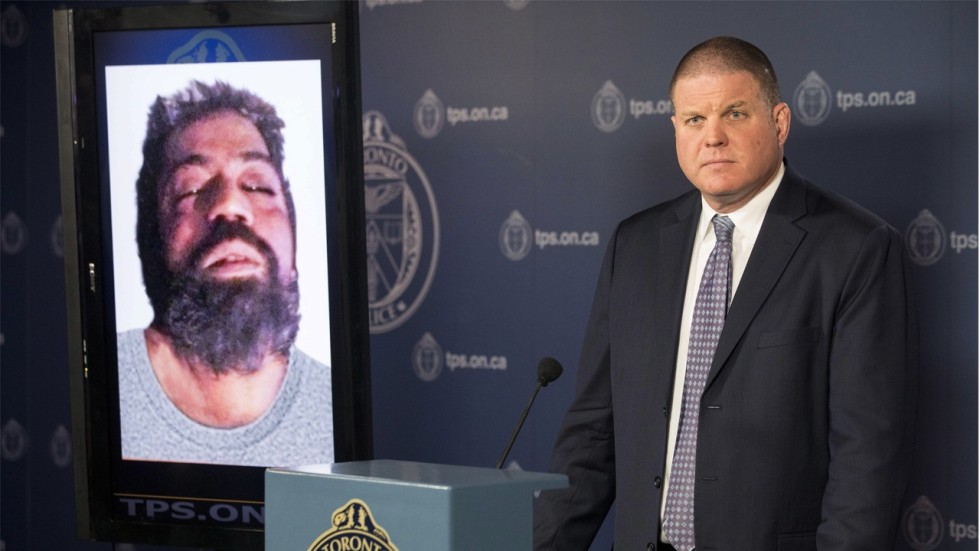
A search of Franklin’s home on 81st Street — not far from the South L.A. corridor where many of the victims’ bodies were found — turned up a .25-caliber semiautomatic handgun. Two criminalists testified at trial that it was same weapon that killed one of the victims.
Franklin’s attorney, Seymour Amster, told jurors that DNA from other men was found at some crime scenes — a sign, he said, that someone else could have played a role in the slayings.
In May, a jury convicted Franklin of 10 counts of murder. His victims, in order of death, were: Debra Jackson, 29; Henrietta Wright, 35; Barbara Ware, 23; Bernita Sparks, 25; Mary Lowe, 26; Lachrica Jefferson, 22; Alicia Alexander, 18; Princess Berthomieux,15; Valerie McCorvey, 35; and Janecia Peters, 25.
Most of the women were shot to death. Berthomieux was strangled.
Franklin was also convicted of attempted murder in connection with an attack on Enietra Washington, who survived and testified against him.
“You’re truly a piece of evil,” Washington told Franklin Wednesday. “You’re a Satan representative… You’re right up there with Manson.”
Franklin initially earned the “Grim Sleeper” nickname because a gap in the killings between 1988 and 2002 suggested he had gone dormant. But detectives believe Franklin never really “slept.”
After the initial conviction, prosecutors presented more evidence against Franklin during the penalty phase of the trial. A woman testified that Franklin, as a U.S. Army private stationed abroad, was one of three assailants who gang-raped her in Germany in 1974.
The high-stakes trial devolved at times into bitter back-and-forths between attorneys, and the discord continued Wednesday.
Videos Of Serial Killers Victims
Before the sentencing, Amster made two last-ditch efforts to keep his client off death row. Kennedy quickly shot down a motion for a new trial based on allegations of prosecutorial misconduct as well as a motion calling for a sentence of life without parole instead of death.
Hours after the sentencing, Amster released a written statement decrying the death penalty in California as a pointless waste of tax dollars.
“Considering the outcomes are often the same since the inmates will almost certainly die from causes other than execution,” Amster said in the statement, “the only significant difference is the millions of dollars wasted on a death verdict.”
California’s death penalty has been the subject of intense legal battles in recent years — there are 746 people on California’s death row, and no one has been executed in the state since 2006.
Follow us on Twitter: @marisagerber, @JamesQueallyLAT
ALSO
UPDATES:
Serial Killin Records
3:35 p.m.: This article was updated with more details from the hearing and some rewriting.
2:20 p.m.: This article was updated with a statement from Franklin’s attorney.
2:03 p.m.: This article was updated with additional details about California’s use of the death penalty and a statement from Franklin’s attorney.
12:55 p.m.: This article was updated with additional details about the sentencing hearing.
12:17 p.m.: This article was updated with additional details from the sentencing hearing.
Most Victims Serial Killer
11:40 a.m.: This article was updated with more details about the hearing.
11:15 a.m.: This article was updated with Franklin receiving the death penalty.
11:00 a.m.: This article was updated with more details about relatives of victims speaking at the hearing.
Serial Killers Recording Victims
10:20 a.m.: This article was updated with a description of relatives of victims speaking at the hearing.
Serial Killer Victims Crime Scenes
This article was originally published at 4 a.m.